

Classification of nouns
The noun is the core of the noun phrase, mainly of the subject of the sentence (the most important part of a sentence or speech). It is a word that identifies a person, animal, place, thing or idea.
It can be classified according to the things it names. First, the nouns are divided into:
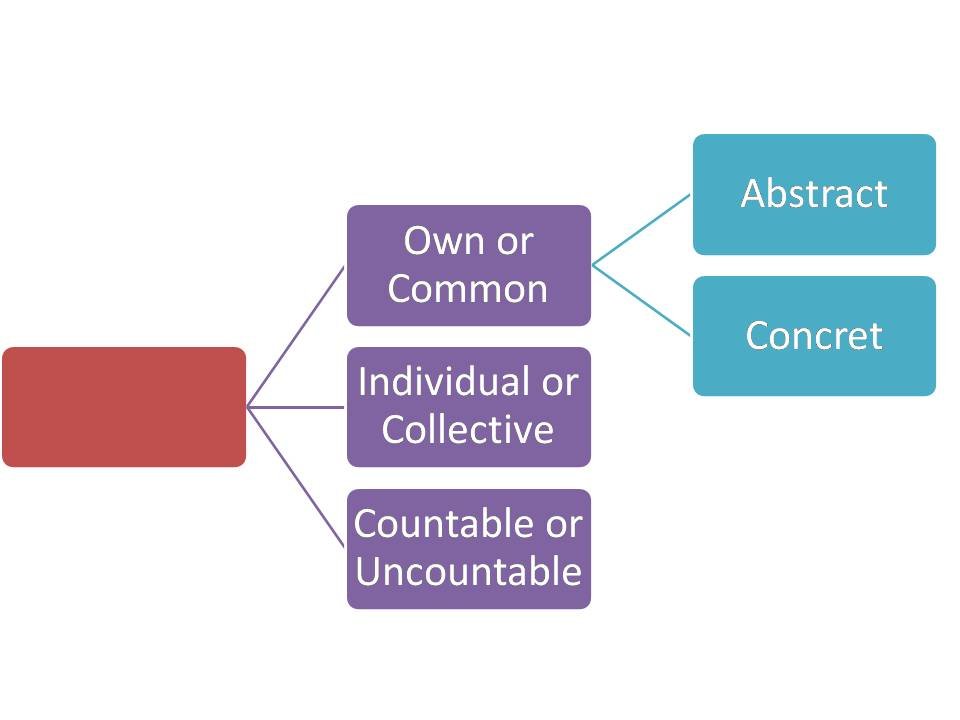
Own or Common
- Own noun: which are those that name a being in a concrete way, whether an object or a subject, in a particular way. Own nouns are always capitalized and can be, for example, names of people or places (Juan, María, Uruguay).
- Common noun: which are those that designate a person, animal and object in a general way, such as casa, mesa, gato, profesor, selva, libertad, and so on. Common nouns are further divided between concrete and abstract.

- Abstract nouns: which designate ideas and feelings that cannot be perceived by the senses, such as amor, tristeza, piedad, dolor, etc.
- Concrete nouns: when they name things that can be perceived by the senses.

Individual or Collective
- Individual nouns: They name a particular being. for example: abeja, lobo.
- Collective nouns: They name beings globally or in a group. For example, “oveja” is individual and “rebaño” is collective.

Countable or Uncountable
- Countable noun: (for example “pera”, “silla”, “padre”)
- Non-countable noun: (“nieve”, “leche”, for example, we cannot say “dos leches” but “un litro de leche”).

One thought on “Nouns”